
Fueling Workouts on Plants: Protein, Hydration and Recovery
Build a plant-based training day with 110 g of protein. Learn when to eat carbs, how to hit your leucine target, and how to replace fluids and electrolytes.
W tym artykule
You finish a hard run, make a banana and oat milk smoothie, and feel hungry again before you’ve showered. The smoothie gave you carbohydrates, which you needed. But unless the oat milk was high in protein or you added soy yogurt or protein powder, it probably didn’t give you much protein. The fix isn’t to trade the banana for a scoop of powder. It’s to keep the banana and add a protein source.
Plant-based sports nutrition works best when each part of the meal has a job. Carbs fuel hard efforts and refill glycogen. Protein supplies amino acids for repair and adaptation. Fluids replace sweat losses, and sodium becomes more useful as sessions get longer, hotter, or sweatier. How much you need depends on what you did today and how soon you’ll train again.
Set your daily protein target, then build meals around leucine
For most runners, lifters, and endurance athletes, 1.4 to 2.0 g of protein per kg of body weight per day is a useful starting range. At 70 kg, that’s 98 to 140 g. Work toward the upper end if your training load is high or many of your meals rely on grains, nuts, and vegetables for protein. Spread your intake across three to five eating occasions rather than trying to catch up at dinner. If a high-fiber diet leaves you too full to eat enough, try tofu, soy milk, or a protein shake instead of simply adding more beans.
Leucine helps signal muscle protein synthesis, but it doesn’t do the building on its own. You still need the other essential amino acids. About 2 to 3 g of leucine is a useful target for a substantial protein meal, not a hard threshold below which the meal stops counting. In practice, start with roughly 25 to 35 g of protein at a main meal and pay attention to the source. Larger athletes may need more.
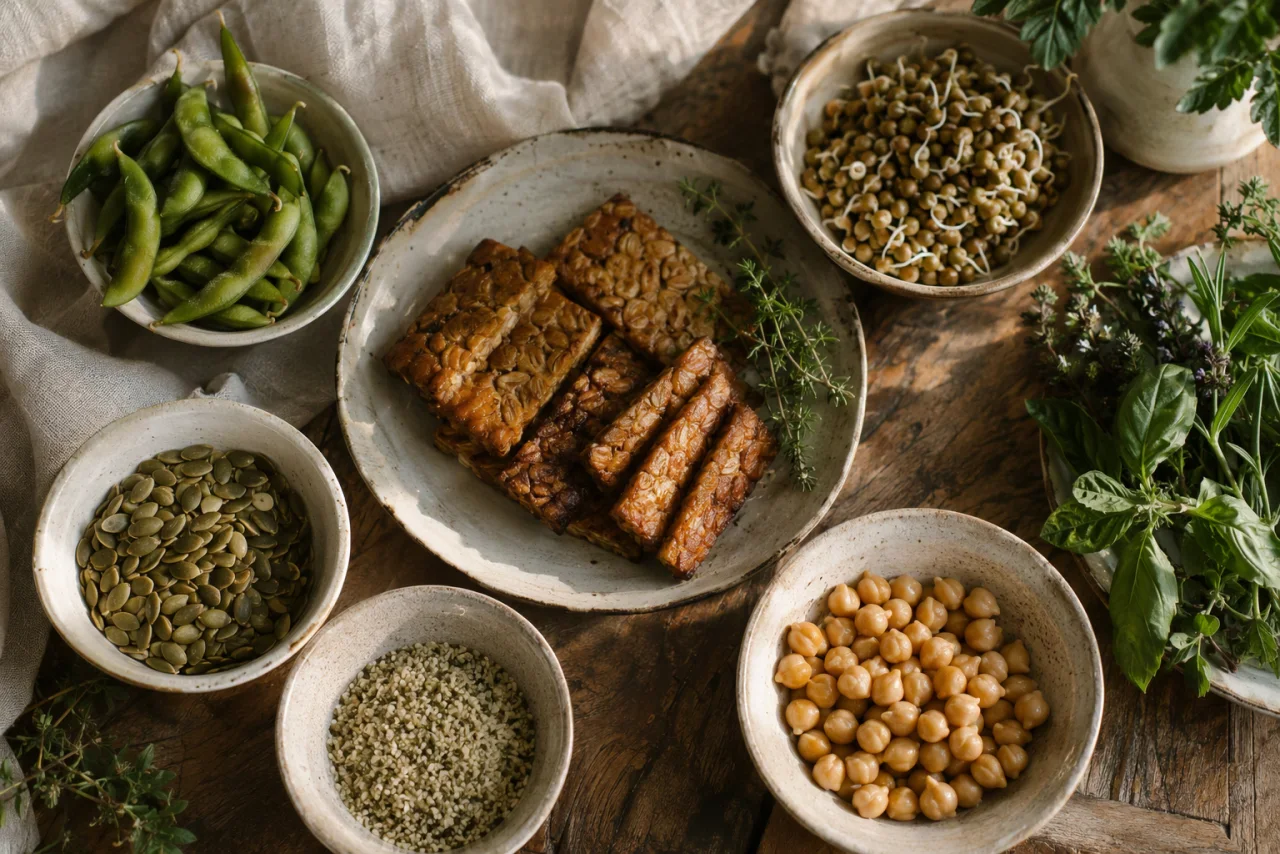
- Soy: Firm tofu, tempeh, edamame, and soy milk provide all the essential amino acids. Check the label: two blocks of tofu the same size can have quite different protein totals.
- Pea: Pea protein isolate is handy when appetite is low after intervals or lifting. Check grams of protein per scoop, not just scoop weight. Peas are relatively low in methionine, so include grains and other protein foods across the day.
- Seitan: Wheat gluten packs in protein, but it’s low in lysine. Pair a seitan dinner with lentils, chickpeas, or edamame rather than relying on seitan as your only regular protein source.
- Pumpkin seeds: A 30 g handful provides about 9 g of protein and 0.7 g of leucine, based on USDA data for dried kernels. Sprinkle them over soy yogurt or a grain bowl rather than making them the meal’s main protein.
Time carbohydrates to the workout, not the clock
For an easy run under an hour, normal meals are often enough. Before heavy lifting, a carb-containing meal or snack can help you avoid starting hungry, especially if it’s been several hours since you ate. Long rides, races, and demanding endurance sessions are where a deliberate fueling schedule pays off most.
| Training situation | Evidence-based carbohydrate target | Practical application | | : | : | : | | Before prolonged or hard exercise | 1 to 4 g/kg in the 1 to 4 hours before | Eat a larger rice or oat meal with several hours to digest. Closer to the start, try toast with jam or a banana. | | During roughly 1 to 2.5 hours of endurance exercise | 30 to 60 g/hour | A gel with 25 g plus a sports drink with 25 g gets you to 50 g. Count what you actually drink. | | During endurance exercise beyond roughly 2.5 to 3 hours | Up to 90 g/hour, if tolerated | Practice with a mix of glucose and fructose sources in training. Don’t jump straight to 90 g on race day. | | After a glycogen-depleting session, with less than 8 hours before the next demanding bout | 1.0 to 1.2 g/kg/hour for the first 4 hours | Start with rice and tofu, then keep carbs coming through snacks and drinks as tolerated. |
These ranges come from the joint sports nutrition position paper cited below. If you train once a day, you rarely need to count hourly recovery carbs. Eat a normal carb-rich meal with protein when practical. If running tends to upset your stomach, move the big lentil salad to later and use lower-fiber foods, such as white rice or toast, close to the run.
Personalize fluids, sodium, creatine, and algae omega-3
Fluids and sodium: Start reasonably hydrated. For short sessions in mild weather, drinking to thirst is often enough. For long or hot sessions, estimate your sweat rate once or twice in conditions that resemble your event. Weigh yourself before and after in similar dry clothing. Add liters drunk to kilograms lost, subtract any liters of urine, then divide by time in hours. If you finish a one-hour run 0.5 kg lighter after drinking 0.4 L, without a bathroom stop, you lost roughly 0.9 L of sweat per hour.
Use that estimate to plan how much to carry, not as a requirement to replace every drop during exercise. Avoid drinking so much that you gain weight during the session. For longer, sweaty sessions, a drink with about 500 to 700 mg of sodium per liter is one reasonable starting point. Check whether the label lists sodium per serving or per liter. An electrolyte tablet may provide sodium without any carbs, so check both numbers before relying on it as your only race fuel.
Creatine: Consider 3 to 5 g of creatine monohydrate daily if strength, power, or repeated hard efforts are priorities. Timing matters less than taking it consistently, and a loading phase is optional. It’s less compelling for steady endurance alone, and the early increase in water weight may matter to some runners. Competitive athletes should choose a batch-tested product.
Algae omega-3: Flax, chia, and walnuts provide ALA, but conversion to EPA and especially DHA is limited. Algae oil supplies DHA directly, and some formulas provide EPA too. If you use the European Food Safety Authority’s adult benchmark of 250 mg of EPA plus DHA daily, count the listed EPA and DHA, not the total milligrams of algae oil. This is a general nutrition benchmark, not a sports recovery dose.
A 110 g protein training day you can actually cook
This example fits an afternoon training session. Protein totals are approximate and depend on your labels. It’s a protein template, not a calorie prescription. Add carbs and overall food as your training volume and appetite demand.
| Meal | What to eat | Approximate protein | | : | : | : | | Breakfast | Oats (40 g, 5 g protein), soy milk (250 mL, 8 g), high-protein soy yogurt (170 g, 9 g), pumpkin seeds (20 g, 6 g), plus berries | 28 g | | Lunch | Firm tofu (150 g, 26 g protein), cooked rice (1 cup, 4 g), cooked broccoli (1 cup, 3 g), plus ginger and soy sauce | 33 g | | After training | Pea protein powder (enough for 20 g protein), blended with a banana (1 g) and water | 21 g | | Dinner | Seitan (75 g, 17 g protein), cooked lentils (½ cup, 9 g), and a small potato (2 g), plus greens and lemon | 28 g | | Daily total | | 110 g |
On a hard running day, add toast and jam before the session or more rice at lunch. If dinner is soon after lifting, you can move the shake to breakfast rather than treating it as mandatory. In Veganistik, use the Nutrition Calculator to check daily Protein, Hydration, and B12, then put your protein anchors into the Meal Planner. The hydration figure is a daily baseline, not a sweat-rate estimate. And the B12 check is a reminder to verify your fortified foods or supplement, rather than assuming a high-protein day covers it.
A practical checklist for your next training week
- Pick three protein anchors you’ll actually eat. Keep tofu, lentils, or soy yogurt on hand. Use Cook From Your Fridge to build around what you have, browse 260+ everyday recipes, or try the 1-tap Craving Swap when you want a familiar meal in a plant-based version.
- Rehearse your longest session. Pack a known amount of carbs, check the sodium per bottle, and note what your stomach tolerates. For unfamiliar packaged foods, Veganistik’s barcode & OCR label scanner and reference for 200+ E-codes across 30 languages can help you check ingredients. Use the nutrition panel for carb and sodium totals.
- Plan a meal at the finish, especially away from home. Use the Global Vegan Map to find a nearby option. The AI Menu Reader and 30-language Waiter Card can help you ask what’s in a dish and request an extra serving of tofu or beans. Vegan Connect and its real-life Vegan Dining Tables offer a way to share a meal with other people.
Once those basics feel routine, the Poore & Nemecek Earth & Animal Impact Dashboard offers a separate way to track food choices, with 110 botanical milestones. Use it for perspective on habits over time, not as a score for your recovery meal.
References
- Thomas DT, Erdman KA, Burke LM. Nutrition and athletic performance. J Acad Nutr Diet. 2016. DOI.
- Jäger R, et al. International Society of Sports Nutrition position stand: protein and exercise. J Int Soc Sports Nutr. 2017. DOI.
- Sawka MN, et al. ACSM position stand: exercise and fluid replacement. Med Sci Sports Exerc. 2007. DOI.
- Kreider RB, et al. ISSN position stand: safety and efficacy of creatine supplementation. J Int Soc Sports Nutr. 2017. DOI.
- EFSA Panel on Dietetic Products, Nutrition and Allergies. Dietary reference values for fats. EFSA Journal. 2010. DOI.
- USDA FoodData Central. Pumpkin and squash seed kernels, dried.
- Poore J, Nemecek T. Reducing food’s environmental impacts through producers and consumers. Science. 2018. DOI.
Najczęściej zadawane pytania
How much protein do plant-based athletes need?
A practical range for most trained athletes is 1.4 to 2.0 g per kg of body weight daily. Spread it across three to five meals or snacks, and favor the upper end if your diet relies heavily on less concentrated protein sources.
How much leucine should a plant-based recovery meal contain?
About 2 to 3 g is a useful planning target, not a strict cutoff. A substantial serving of soy or pea protein makes it easier to reach, while pumpkin seeds are better used as a topping than as the main protein source.
When do runners need carbs and electrolytes during a workout?
For endurance sessions lasting about 1 to 2.5 hours, aim for 30 to 60 g of carbohydrate per hour. Sodium is most useful during long, hot, or high-sweat sessions. A short, easy run usually needs neither mid-run carbs nor electrolytes.
Should vegan athletes take creatine and algae oil?
Creatine monohydrate at 3 to 5 g daily can support strength and repeated high-intensity efforts. Algae oil provides preformed DHA and, in some products, EPA. It is a way to meet omega-3 intake goals, not a proven recovery booster.
Wykorzystaj te wskazówki już dziś
Skanuj etykiety w sekundę, zamieniaj ulubione dania na roślinne, obliczaj cele dotyczące białka i B12 oraz poznawaj wegan w swojej okolicy przy wspólnym stole.
Czytaj dalej

The 30-Day Plant-Based Blueprint for a Low-Stress Transition

Veganistik vs HappyCow, Abillion and Fig: A Whole-Day Test