Beyond Protein: A Practical Guide to Five Vegan Nutrients
Learn how to get iron, omega-3, calcium, zinc and iodine on a plant-based diet. Find easy food pairings, better label habits and smart supplement choices.
V tomto článku
Your lentil bowl has plenty of protein, but the red pepper you chop into it changes how much iron you absorb. That splash of oat milk in your coffee? It might contribute meaningful calcium, or almost none, depending on the carton. These small decisions matter more than whether your lunch looks impressive.
A practical plant-based diet needs a few repeatable habits, not a nutrient calculation for every meal. Pair plant iron with vitamin C, eat legumes and seeds regularly, build in dependable calcium and iodine sources, and distinguish the omega-3 in flax from the DHA in algae oil. Here’s how to make those decisions at the grocery store and in your own kitchen.
Iron: Put vitamin C on the same plate
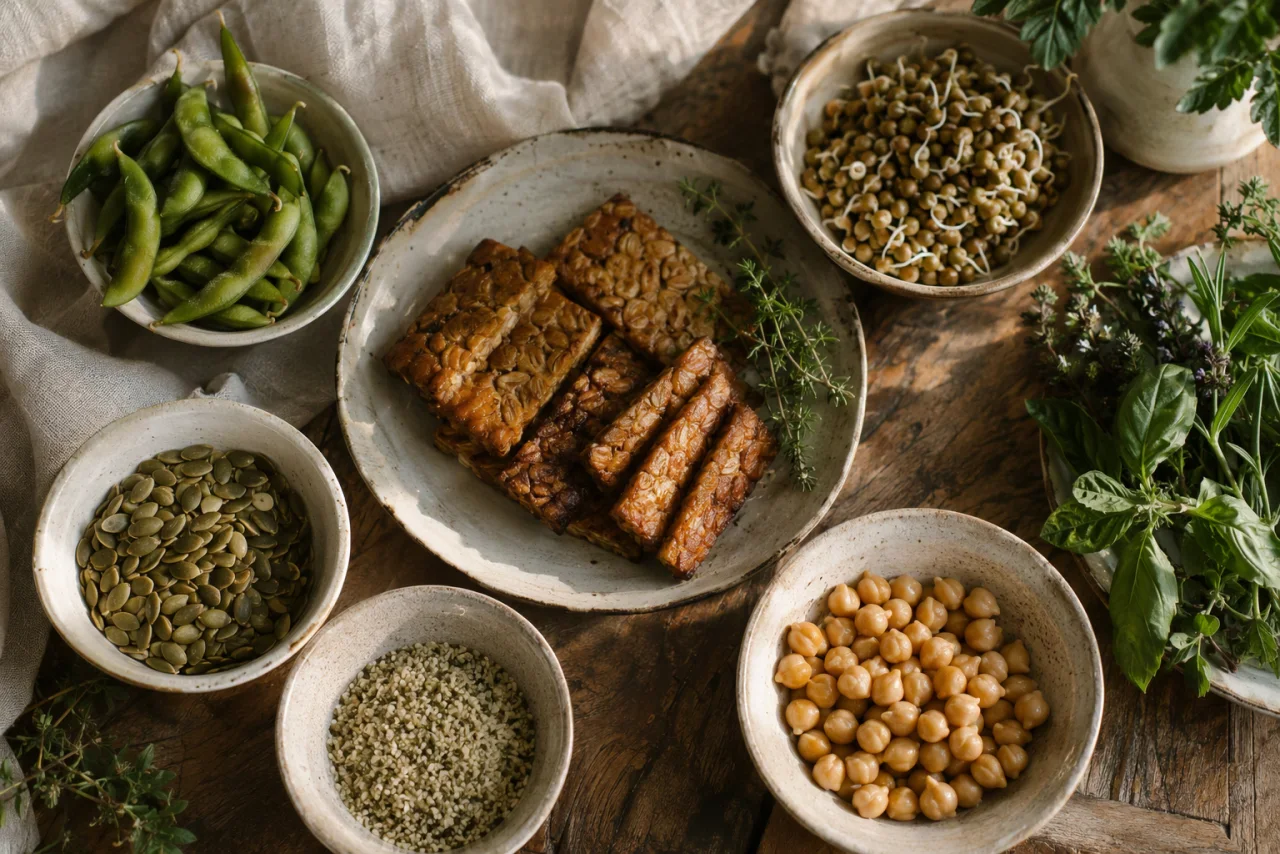
Plant foods provide non-heme iron. How much you absorb depends in part on the rest of the meal. Vitamin C helps keep iron in a form that’s easier to absorb, so timing matters: the orange you eat with lentils is more useful for that meal’s iron than the orange you ate hours earlier. Try black beans with tomato salsa, hummus with raw red pepper, or baked tofu and broccoli with lemon squeezed over the plate.
| Nutrient | Whole-food plant sources and useful alternatives | What helps absorption or improves reliability | Practical tip |
|---|---|---|---|
| Iron | Lentils, beans, pumpkin seeds; ½ cup cooked lentils provides about 3 mg | Vitamin C in the same meal improves non-heme iron absorption | Add bell pepper or citrus; move tea and coffee between meals if iron stores are low |
| Omega-3 | Chia, ground flax, walnuts; 1 oz chia provides about 5 g ALA | The body converts only a limited amount of ALA to DHA and EPA | Algae oil supplies DHA directly; check the label if you also want EPA |
| Calcium | Bok choy, kale, collards; fortified soy milk can supply about 300 mg per cup | Low-oxalate greens provide more absorbable calcium than spinach; vitamin D supports absorption | Check tofu and plant milk labels; choose lichen-derived D3 or vegan D2 if supplementing |
| Zinc | Beans, chickpeas, pumpkin seeds; 1 oz roasted pumpkin seeds provides about 2.2 mg | Fermentation and some soaking or sprouting methods can reduce phytate | Rotate beans, tempeh, seeds and leavened whole-grain bread |
| Iodine | Seaweed contains iodine, but the amount varies widely by species and product | A labeled source is more reliable than trying to improve absorption | Use iodized salt without adding more salt overall, or consider a measured supplement |
The serving estimates come from the U.S. National Institutes of Health Office of Dietary Supplements. They describe nutrient content, not the amount your body will absorb. Fortified products vary, so use the package label for your particular brand.
Tea and coffee contain polyphenols that can reduce non-heme iron absorption when consumed with meals. If you have heavy periods, donate blood regularly, or have been told your ferritin is low, drinking them between meals is a practical adjustment. Persistent fatigue or suspected deficiency calls for assessment, not a high-dose iron supplement on a hunch. A clinician can interpret blood counts and ferritin and look for causes beyond diet.
Zinc: Keep the beans and vary how you prepare them
Phytate in legumes, seeds and whole grains binds some zinc during digestion. That doesn’t make these foods poor choices: they still provide zinc, and eating them often is more useful than trying to eliminate phytate. Think chickpeas at lunch, pumpkin seeds on soup and tempeh in a stir-fry, rather than expecting a sprinkle of seeds to do all the work.
Fermentation and leavening can break down some phytate. A fermented soy food or a leavened whole-grain loaf gives you another way to get zinc without a separate prep project. Soaking or sprouting can help in some foods, but the effect varies by method. If canned beans are what you’ll actually use on a weeknight, keep buying them.
Veganistik’s Cook From Your Fridge can help turn leftover chickpeas and peppers into dinner instead of another shopping trip. The 260+ everyday recipes and 1-tap Craving Swap are useful when you need a meal you want to eat, not another list of foods you should buy.
Omega-3: Get ALA regularly, then decide about algae oil
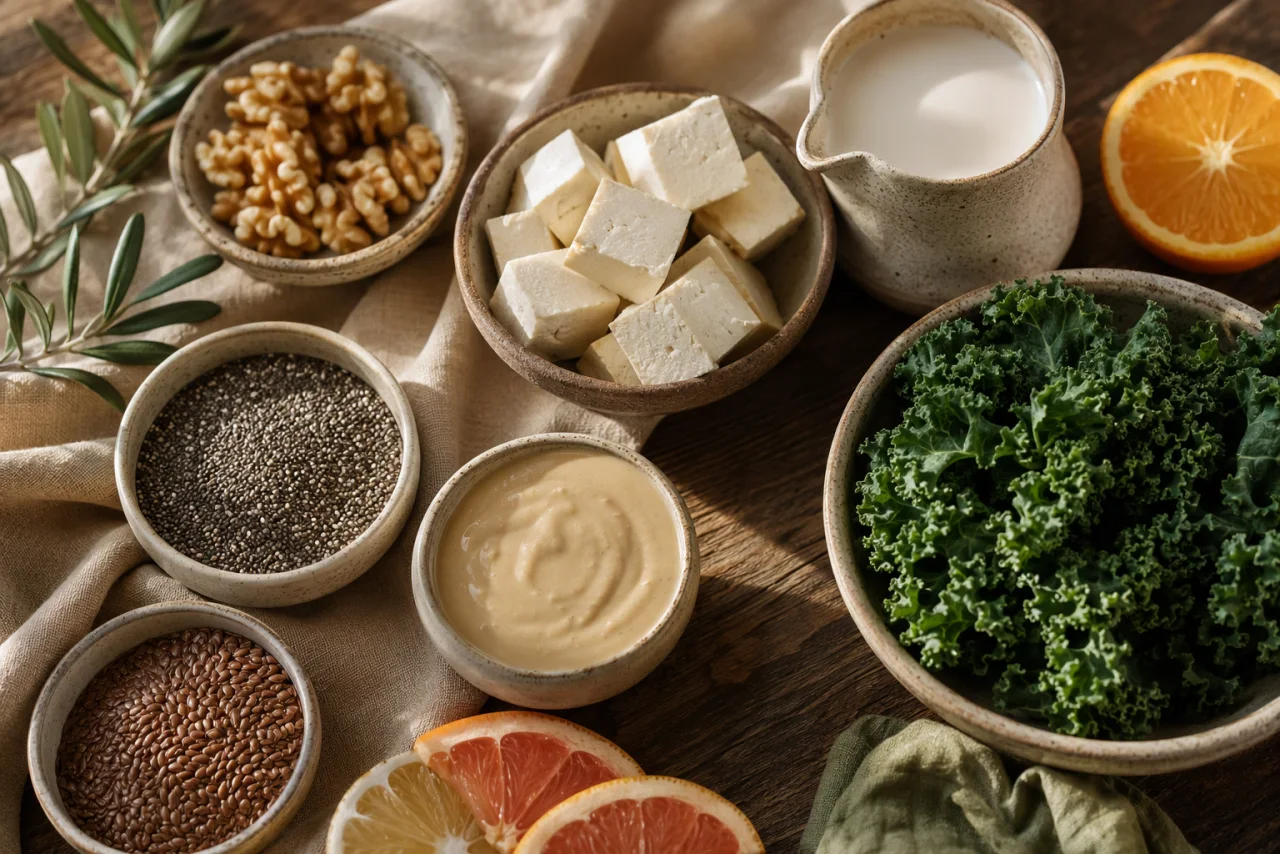
ALA, or alpha-linolenic acid, is an essential omega-3 fat. Ground flax stirred into porridge, chia in soy yogurt, or walnuts on a salad are easy ways to get it. The U.S. adequate intake for ALA is 1.1 g daily for adult women and 1.6 g for adult men. A tablespoon of ground flax provides roughly 1.6 g. Grinding flax makes the seed’s contents more accessible than swallowing the seeds whole.
DHA and EPA are different omega-3 fats. Your body can make them from ALA, but conversion is limited and varies from person to person, especially for DHA. Algae oil provides a direct vegan source. There’s no U.S. recommended dietary allowance for EPA and DHA, and not every adult needs a supplement. If you choose one, check the milligrams of DHA and EPA per serving rather than the total weight of the oil. Some algae products supply DHA alone. If you’re pregnant or breastfeeding, ask your care team about DHA and how it fits with your prenatal supplement.
Calcium: Check the carton, the tofu and your vitamin D
Most U.S. adults ages 19 to 50 need 1,000 mg of calcium daily. Women ages 51 to 70 and all adults over 70 need 1,200 mg. Instead of trying to cover that at dinner, build calcium into two or three eating occasions: fortified soy milk with oats, calcium-set tofu at lunch, and bok choy with dinner. Spinach is nutritious, but its oxalate binds much of its calcium. Kale, collards and bok choy are better choices when calcium is the goal.
For tofu, look for calcium sulfate in the ingredients and confirm the amount on the nutrition panel. For plant milk, check the calcium per serving and shake the carton before pouring, since some added calcium can settle. Veganistik’s barcode and OCR label scanner, available in 30 languages and covering 200+ E-codes, can help with unfamiliar ingredient lists. The nutrition panel is still the place to confirm the calcium amount.
Vitamin D helps your body absorb calcium. If you need a supplement, vegan D2 and lichen-derived D3 are options. Some D3 is made from lanolin, so check the source. The U.S. recommended intake is 600 IU (15 mcg) for adults through age 70 and 800 IU (20 mcg) after 70. Those are total intake targets, not instructions to take that amount on top of whatever you’re already getting.
Iodine: Pick a reliable source and make it routine
Iodine is needed to make thyroid hormones. Most adults need 150 mcg per day, with higher needs during pregnancy and breastfeeding. Sea salt, kosher salt and pink salt aren’t reliable sources unless the label says they’re iodized. If you cook with salt, replace some of the salt you already use rather than adding more. If you limit sodium, rarely cook with salt or can’t find iodized salt locally, a measured supplement can be more predictable.
Kelp and kombu can contain very high amounts of iodine, and seaweed content varies enough that a casual handful isn’t a dependable dose. If you have thyroid disease, are pregnant or already take a multivitamin, review your sources with a clinician before adding iodine. Check the label first so you don’t accidentally double up.
A weekly checklist you can actually use
- Stock one bean or lentil you like and a vitamin C partner, such as frozen broccoli, peppers or oranges.
- Keep ground flax, chia or walnuts where you’ll see them at breakfast.
- Read the calcium panel on your usual plant milk and tofu. Put at least two dependable calcium sources into your daily routine.
- Check whether your salt says iodized and whether any supplement already contains iodine or vitamin D.
- Review B12 separately. Veganistik’s daily Protein/Hydration/B12 Calculator supports those three habits, not diagnosis or tracking of all the nutrients in this guide.
When eating out interrupts the routine, use the 30-language Waiter Card or AI Menu Reader to ask better ingredient questions. Neither can confirm a restaurant’s iodine or calcium content. The Global Vegan Map can help you find places to eat, while Vegan Connect and real-life Vegan Dining Tables are places to exchange ideas about local fortified products and meals people actually cook. The Poore & Nemecek Earth & Animal Impact Dashboard, with 110 botanical milestones, serves a different purpose: it puts food choices in environmental context, not nutritional context. Veganistik provides educational nutrition tools, not medical diagnosis.
References
- Hurrell R, Egli I. Iron bioavailability and dietary reference values. American Journal of Clinical Nutrition. 2010;91:1461S–1467S.
- Hambidge KM, et al. Zinc bioavailability and homeostasis. Journal of Nutrition. 2010;140:135S–141S.
- Brenna JT, et al. Alpha-linolenic acid supplementation and conversion to long-chain omega-3 polyunsaturated fatty acids in humans. Prostaglandins, Leukotrienes and Essential Fatty Acids. 2009;80:85–91.
- Weaver CM, Proulx WR, Heaney R. Choices for achieving adequate dietary calcium with a vegetarian diet. American Journal of Clinical Nutrition. 1999;70:543S–548S.
- Leung AM, et al. Iodine status and thyroid function of Boston-area vegetarians and vegans. Journal of Clinical Endocrinology & Metabolism. 2011;96:E1303–E1307.
- Poore J, Nemecek T. Reducing food’s environmental impacts through producers and consumers. Science. 2018;360:987–992.
- NIH Office of Dietary Supplements. Health professional fact sheets for iron, zinc, omega-3 fatty acids, calcium, vitamin D and iodine.
Často kladené otázky
How can I absorb more iron from plant foods?
Eat a vitamin C source, such as bell pepper, citrus or broccoli, in the same meal as beans, lentils or tofu. If your iron stores are low, have tea and coffee between meals.
Do vegans need an algae omega-3 supplement?
Not every adult needs one. Flax, chia and walnuts supply essential ALA, but conversion to DHA and EPA is limited. Algae oil supplies DHA directly, and some products also provide EPA.
What are the best sources of calcium on a vegan diet?
Choose calcium-set tofu, fortified plant milk and low-oxalate greens such as bok choy, kale and collards. Check labels because calcium content varies widely across tofu and plant milks.
How can vegans get iodine without eating seaweed?
Use iodized salt in place of some noniodized salt without increasing total salt. If that does not reliably cover your needs, consider an iodine supplement with a clearly labeled dose.
Vyzkoušejte tipy z článku už dnes
Skenujte složení během sekundy, najděte rostlinnou alternativu k oblíbenému jídlu, spočítejte si cíle pro příjem bílkovin a B12 a seznamte se s vegany ve svém okolí při společném stolování.
Čtěte dál
The 30-Day Plant-Based Blueprint for a Low-Stress Transition

Veganistik vs HappyCow, Abillion and Fig: A Whole-Day Test